 EarlyFlux
2026 EDITION
EarlyFlux
2026 EDITION
From Idea to SaaS
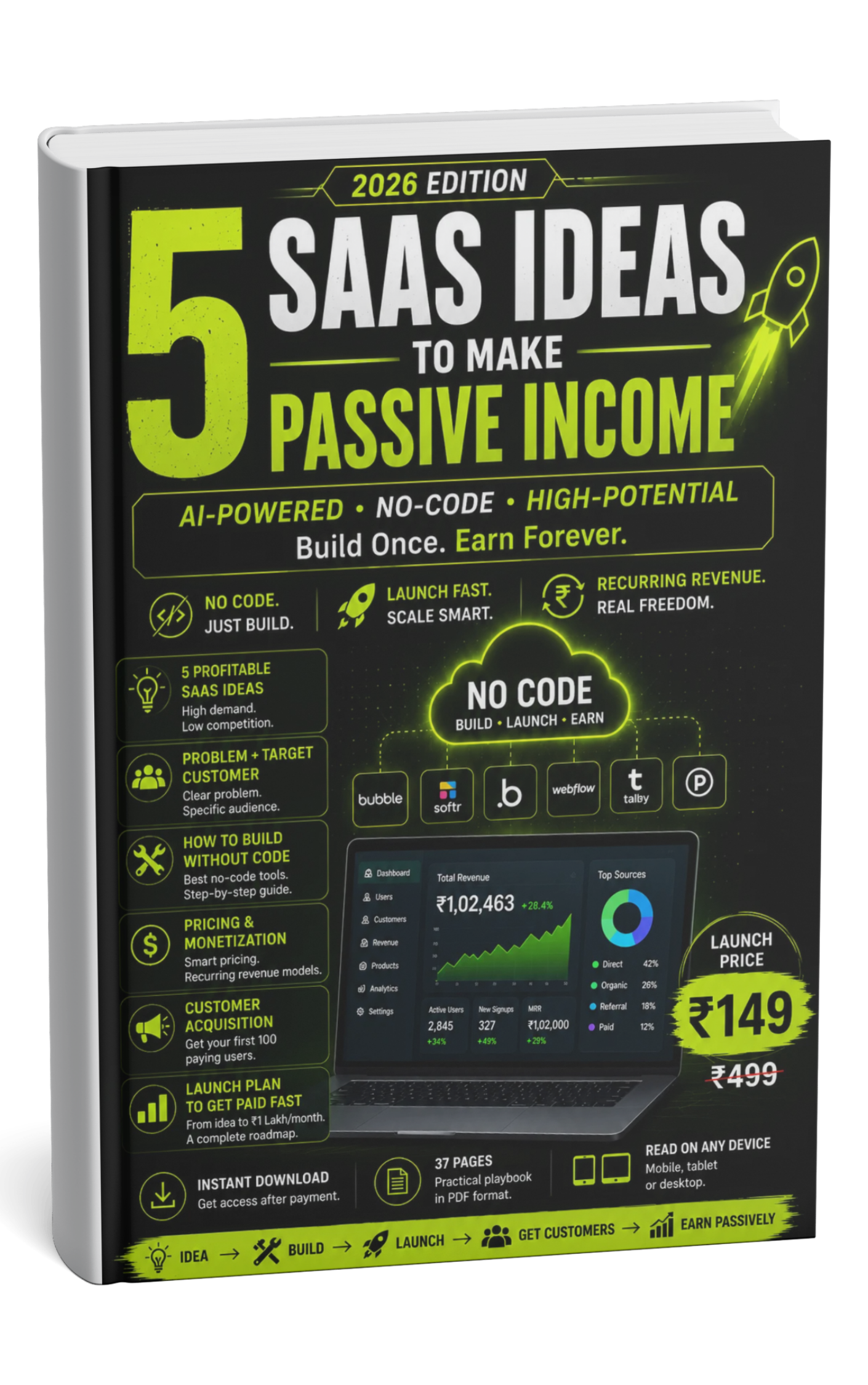
5 AI-Powered Business Ideas With ₹1 Lakh/Month Potential
✓ Research-Backed SaaS Ideas
✓ Real Problems & Target Customers
✓ No-Code + AI Build Stack
✓ Practical Pricing Strategies
✓ First-Customer Acquisition Plan
Ye playbook doosri wali cheez sikhata hai — ek chhota SaaS jo ek real problem solve kare, aur $1,000/month tak scale ho sake.
Does this sound like your Sunday night?
Aapne har startup video dekh li. Har thread save kar liya. Par jab actually kuch banane baithte ho — blank screen. Familiar lagta hai?
200+ ghante content, ₹0 income
Aapne itna startup content consume kar liya hai jitna ek course mein hota hai. Par bank account mein uska ek rupaya nahi dikhta. Knowing aur doing ke beech ka gap badhta ja raha hai.
“Next week se shuru karunga” — 6 mahine se
Har Monday “wahi week” hota hai. Par jab clear system na ho, next week next month ban jaata hai. Ye aalas nahi hai — ye ek proven path ka na hona hai.
Galat cheez banane ka dar
Agar hafte lagakar aisa product bana diya jo koi nahi chahta? Agar niche hi galat chun liya? Isi soch mein log ruk jaate hain, aur baaki log shuru kar dete hain.
Inme se koi bhi aap ho — to ye playbook exactly aapki situation ke liye hai.
Aur system ke bagair yahi cycle chalta rehta hai
Mahina dar mahina, saal dar saal. Aur cost sirf paisa nahi hoti — time, confidence aur aapka future bhi.
Ek aur saal, zero business
“Perfect” idea dhoondhte hue 12 mahine nikal jaate hain. Roz naye log wahi market mein enter karte hain — kam talent, zyada action ke saath.
Consuming, not creating
Ek aur video, ek aur thread. Productive feel hota hai, par ye content treadmill kabhi income produce nahi karta. Ye procrastination ka sabse mehnga roop hai.
Same tools, different result
Jo log launch kar rahe hain, unke paas koi secret tool nahi hai. Wahi Softr, wahi Airtable, wahi AI. Farq sirf ek hai — unke paas sequence hai. Aapke paas abhi nahi.
Kharidne se pehle, ye 2 minute dekh lo.
Micro SaaS actually kya hota hai, no-code se ek product kaise khada hota hai, aur ye paanch ideas explore karne layak kyun hain. Pehle samjho — phir decide karo.
Agar ye baat sahi lagti hai, to poora playbook andar hai.
{{ ctaLabel }} →Introducing: 5 Micro SaaS You Can Build Without Code
37 pages. 11 chapters. 3 parts. Har blueprint mein customer, timing, pricing, exact no-code stack, proof, pehle 10 customers aur ek weekend action plan. Ideas ki list nahi — ek system.
What Micro SaaS Really Is
Chhota business kyun jeet jaata hai, aur kaunsi problem paise laati hai.
Your No-Code Toolkit
Chaar layers — interface, database, automation, payment — aur kharcha.
How to Use the 5 Playbooks
Kaunsa idea aapke liye hai — decide karne ka framework.
The Client Portal
Freelancers aur agencies ke liye branded client portal. $29–149/mo.
Testimonial Collector
Text aur video reviews collect karke embeddable widget banao.
The Niche Job Board
Ek industry ka focused board. ₹8,000–25,000 per job post range.
AI Content Repurposer
Ek content se har platform ka content — Make + AI + Softr.
Local Reputation Hub
Local businesses ke reviews monitor aur generate karne ka dashboard.
Validate Before You Build
10 conversations, payment signal, pre-sale — banane se pehle.
Pricing & First 10 Customers
Tiers kaise banao, kya charge karo, pehle buyers kahan milenge.
Mistakes & Your Next 30 Days
Hafta-wise plan: choose → talk → build → launch.

Hey, I'm Satyam Mishra.
I've been building businesses for the last 4 years. I started very young with freelancing because I wanted to earn on my own. From there, I moved into running an agency, explored e-commerce, and eventually started building businesses around AI, EdTech and Real Estate.
And honestly, I've failed too. I'm not here to tell you that I know everything. I don't. But every failure taught me something.
When I look back, one of the biggest reasons behind my early failures was the lack of proper mentorship, practical exposure and someone who could actually guide me through the process. I had to learn most things by making mistakes. And I know many of you are going through the same thing.
Don't look at me as someone sitting above you and giving you lectures. Think of me as a friend who has already made some of the mistakes you're about to make. I'll share what has worked for me, what didn't work, and what I wish someone had told me when I was starting out.
Today, I'm fortunate to be building multiple ventures, including an AI platform with 1,200+ paid users, while also working on platforms in the Real Estate and EdTech space. Alongside building businesses, I'm currently pursuing my graduation in Sales & Marketing, so this is not just something I study — it's something I actively practice in the real world.
I'm still learning. I'm still experimenting. I'm still making mistakes. And that's the point. You don't need a “perfect” mentor. You need someone who is willing to learn, build and grow with you.
So if you're starting from zero, don't worry. Let's build together.
Playbook haath mein aane par kya badalta hai
Clarity — paralysis khatam
“Pehle kya karun?” ka sawaal khatam. Har chapter agle par khada hai — aaj, kal aur agle hafte ka kaam saaf.
Ek asli business, side-hustle fantasy nahi
Subscription revenue jo har mahine repeat hota hai — ghante bechne se alag. Book mein real price points diye hain, hawaai numbers nahi.
Speed — hafton mein, mahino mein nahi
No-code stack ka matlab hai 1–4 hafte mein pehla version. No coding, no hiring, no funding.
Kharcha ₹4,000–16,000 mahina
Poora stack chalane ka yahi range hai — chahe 2 customer hon ya 50. Team, office, investor ki zaroorat nahi.
Tools 80% kaam karte hain
Softr, Airtable, Make aur Stripe milkar product chalate hain. Aap strategy aur customers par focus karte ho.
Recurring income, one-time kaam
Ek baar set karo, subscription har mahine aata rahe. Chapter 10 pricing aur tiers ka poora structure deta hai.
Idea se pehle paying customer tak — 4 steps
Poora safar ek simple, repeatable process mein toda gaya hai. No overwhelm — sirf action.
Ek idea chuno
Chapter 3 ka framework use karke wo idea chuno jiska market aap already samajhte ho.
Validate karo
10 real conversations. Chapter 9 batata hai kya poochhna hai aur payment signal kaise pehchanna hai.
Chhota version banao
Chapter ka exact stack lo aur ek core feature khada karo. Zaroorat pade to kuch kaam haath se karo.
Launch aur becho
Jinse baat ki thi unhe dikhao, khud setup karke do. Target: pehla paying customer.
Ab se 90 din baad ki apni situation socho
Ye guarantee nahi hai — ye us process ka natural outcome hai jo book sikhati hai. Kitna door jaate ho, wo aapki mehnat par depend karta hai.
5 ideas. 5 problems. 5 businesses worth exploring.
Kiske liye hai, kya problem solve karta hai, paise kaise banta hai. Poora blueprint book ke andar hai.
Client Portal
Testimonial Collector
Niche Job Board
AI Content Repurposer
Local Reputation Hub
Pick one. Not five.
Paanchon padho, phir sirf ek uthao — wo jiska market aap samajhte ho ya jahan tak aapki pehchaan hai. Ek theek se, paanch adhoore se behtar.
Before vs after
Ye playbook vs baaki sab
| Free YouTube | ₹5,000+ courses | This playbook | |
|---|---|---|---|
| Specific businesses to build | Scattered | Usually one | 5 complete |
| Exact no-code stack | Tool reviews | Sometimes | Per idea |
| Pricing + tiers | Rarely | Partly | Chapter 10 |
| First 10 customers plan | No | Sometimes | Every idea |
| Time to finish | Endless | Weeks | One sitting |
| Price | Free (costs time) | ₹5,000–25,000 | {{ priceLabel }} |
Sirf cover dekh ke decide mat karo
Ye asli table of contents hai, exactly jaisa book mein hai.
Ek no-code SaaS ki chaar layers: interface, database, automation aur payment. Ye hain wo tools:
“Ten customers at $50 beats fifty customers at $10 — same revenue, one-fifth the support.”
Poora no-code stack lagbhag ₹4,000–16,000 mahina — chahe 2 customer hon ya 50.
Ek chai se kam. Ek business plan se zyada.
Ye price 37 pages ka nahi hai. Ye us saved time ka hai jo aap galat idea par lagate.
Ye kiske liye hai — aur kiske liye nahi
Student
“Kuch shuru karna hai, par pehla step samajh nahi aata.”
Freelancer
“Client ki problems pata hain — ek ko product bana sakta hoon.”
Creator
“Audience hai, ab uski ek repeating problem ka tool banana hai.”
Marketer
“Customers laana aata hai, par product kya banaun clear nahi.”
Non-technical founder
“Ideas hain, par coding hi rukawat ban jaati hai.”
Solopreneur
“Kuch aisa chahiye jo akela bana aur chala sakoon.”
Sawaal? Yahan jawab hain.
Main complete beginner hoon — ye mere liye hai? +
Haan. Poori book no-code approach par hai aur basics se shuru hoti hai. Coding, design ya technical background ki zaroorat nahi.
Ye course hai ya eBook? +
Ye ek practical PDF playbook hai — 37 pages, 11 chapters. Na video modules, na community, na live classes. Ek baithak mein padho, phir build karte waqt reference banao.
Income guarantee hai? +
Nahi. Bilkul nahi. Book aapko ideas, frameworks aur strategies deti hai — result aapke market, mehnat aur execution par depend karta hai. Andar diye revenue numbers benchmarks hain, promise nahi.
Payment ke baad kya milta hai? +
Payment successful hone par aap download page par pahunch jaate ho, jahan se poori PDF download ho jaati hai. Koi dikkat aaye to footer ke contact link se likho.
Mere paas budget nahi hai — phir bhi ban jaayega? +
Book saaf batati hai — poora no-code stack lagbhag ₹4,000–16,000 mahina mein chalta hai, aur kai tools ka free tier se shuru kiya ja sakta hai. Ads ka kharcha zaroori nahi; pehle customers manual outreach se aate hain.
Result kitne time mein dikhega? +
Book ka 30-day plan hai: hafta 1 idea chuno, hafta 2 customers se baat karo, hafta 3 chhota version banao, hafta 4 launch karo. Kitna jaldi chalega ye aapki speed aur niche par depend karta hai.
Mere paas audience ya followers nahi hain. +
Zaroorat bhi nahi. Har playbook mein pehle 10 customers ka plan hai — wo log kahan already baithe hain (communities, groups, local businesses) aur unse kya kehna hai.
Paanchon ideas bana sakta hoon? +
Explore paanchon karo, par recommendation ek hi hai — ek chuno, validate karo, phir banao. Ek theek se, paanch adhoore se behtar.
Refund milta hai? +
Nahi — ye digital product hai aur payment ke turant baad poori file mil jaati hai, isliye refund nahi hota. Isi wajah se poora table of contents, paanchon ideas aur video sab kharidne se pehle yahan diya gaya hai. Payment ya delivery mein koi dikkat ho to hum turant theek karte hain — refund policy padho.
Agar aap yahan tak padh chuke ho, to aap casual browser nahi ho — aap actually kuch banana chahte ho.
Aur is page ki sabse badi cost {{ priceLabel }} nahi hai. Sabse badi cost hai agle 6 mahine intezaar karna, aur wapas usi sawaal par khada hona — “banaun kya?”
{{ priceLabel }} ek pizza se kam hai. Farq sirf ye hai ki pizza kal khatam ho jaata hai — ye playbook aapke paas rehta hai, aur ek idea de sakta hai jo test karne layak ho.
Sawaal ye nahi hai ki system kaam karta hai ya nahi. Sawaal ye hai ki aap aaj action lo ge, ya 6 mahine baad yahi page dobara padho ge.
Aapka pehla software business ek decision door hai.
Ek idea chuno. Customers se baat karo. Chhota banao. Pehla customer lao. Book yahi sequence sikhati hai — step by step.
Is book mein diye ideas, pricing, tools aur revenue ranges educational aur illustrative purpose ke liye hain. Software pricing badalti rehti hai — current plans vendor se confirm karein. Revenue examples benchmarks hain, guarantee nahi. Result aapke niche, validation, mehnat aur execution par depend karta hai. Ye financial ya legal advice nahi hai.